ARCHIV: "FEMALE"

VENUSWUZZLER

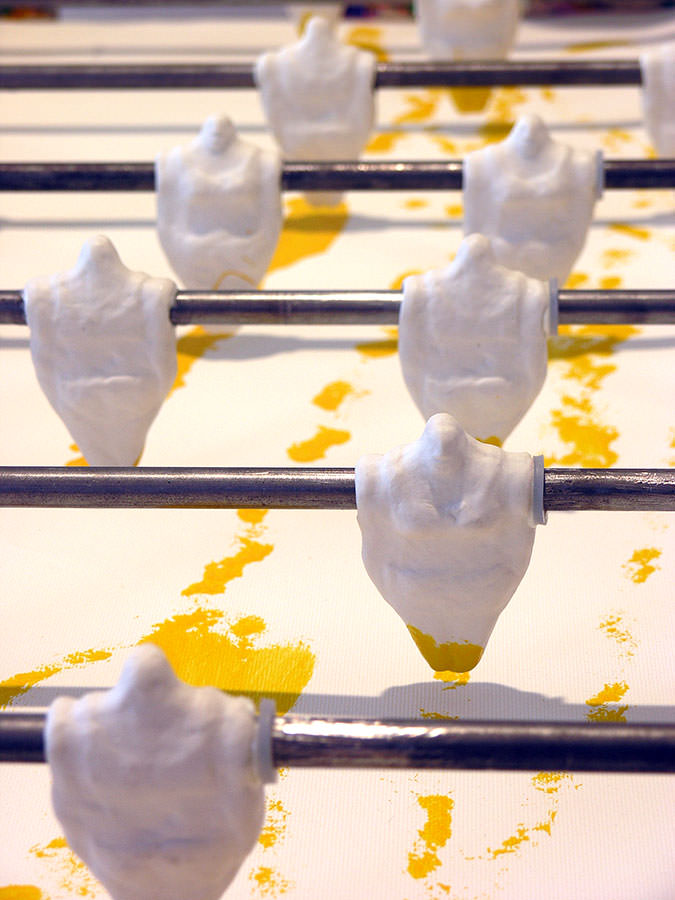
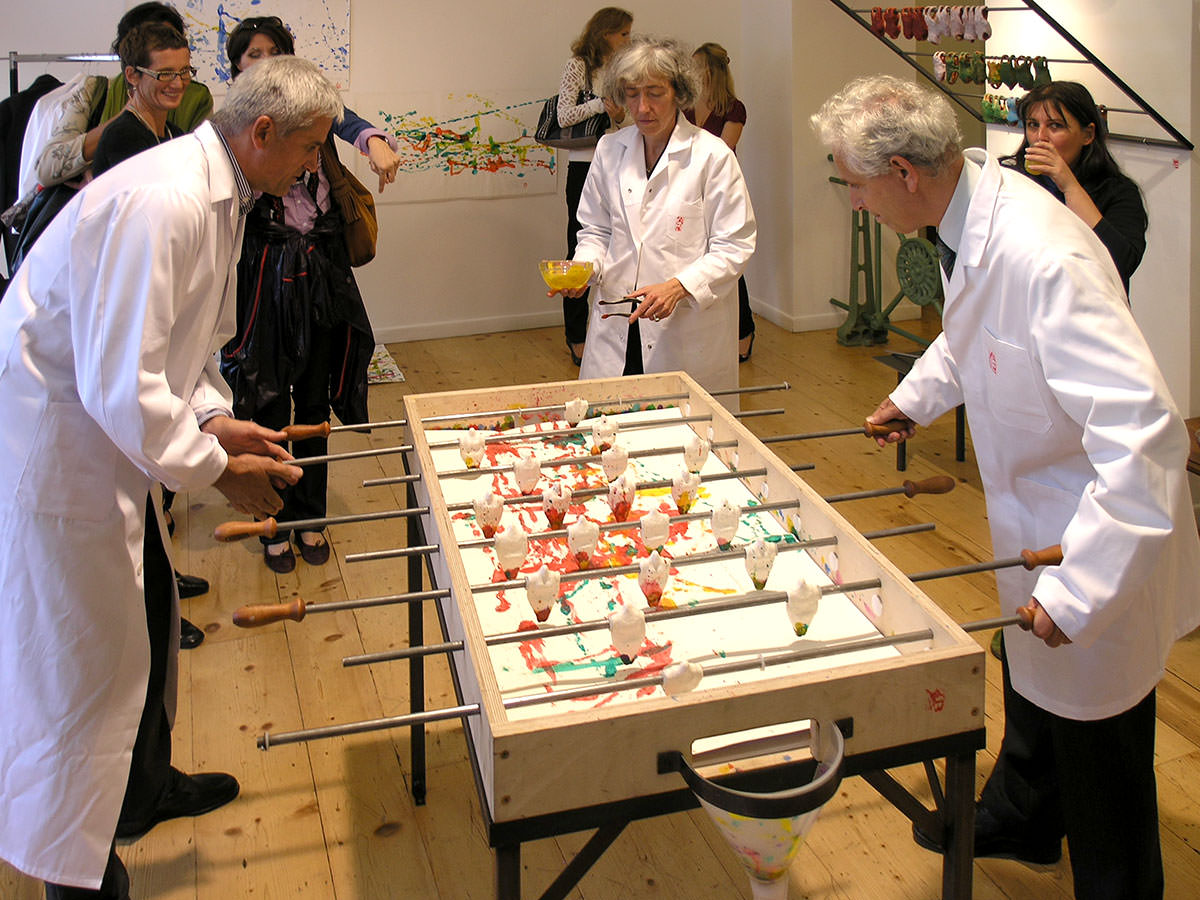
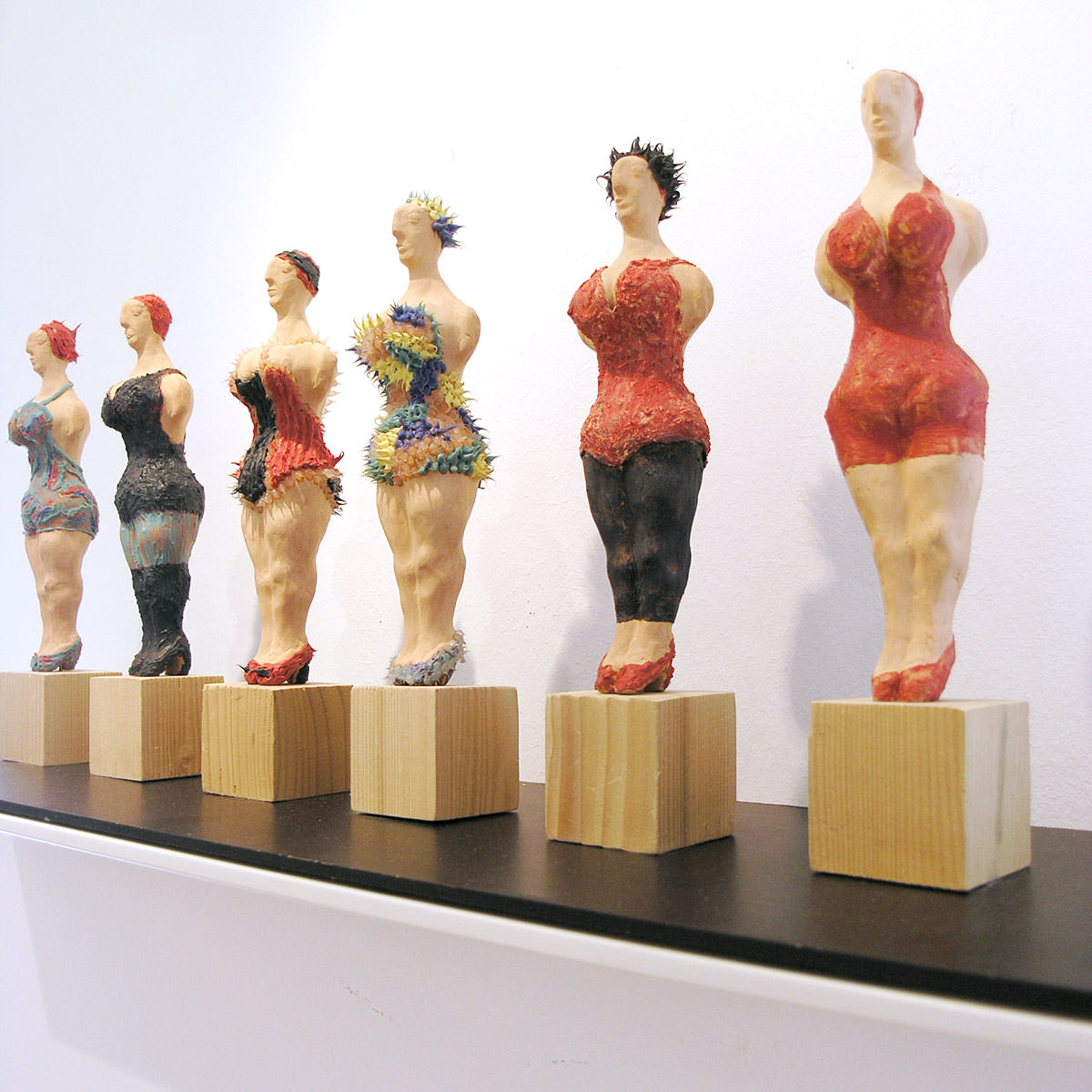
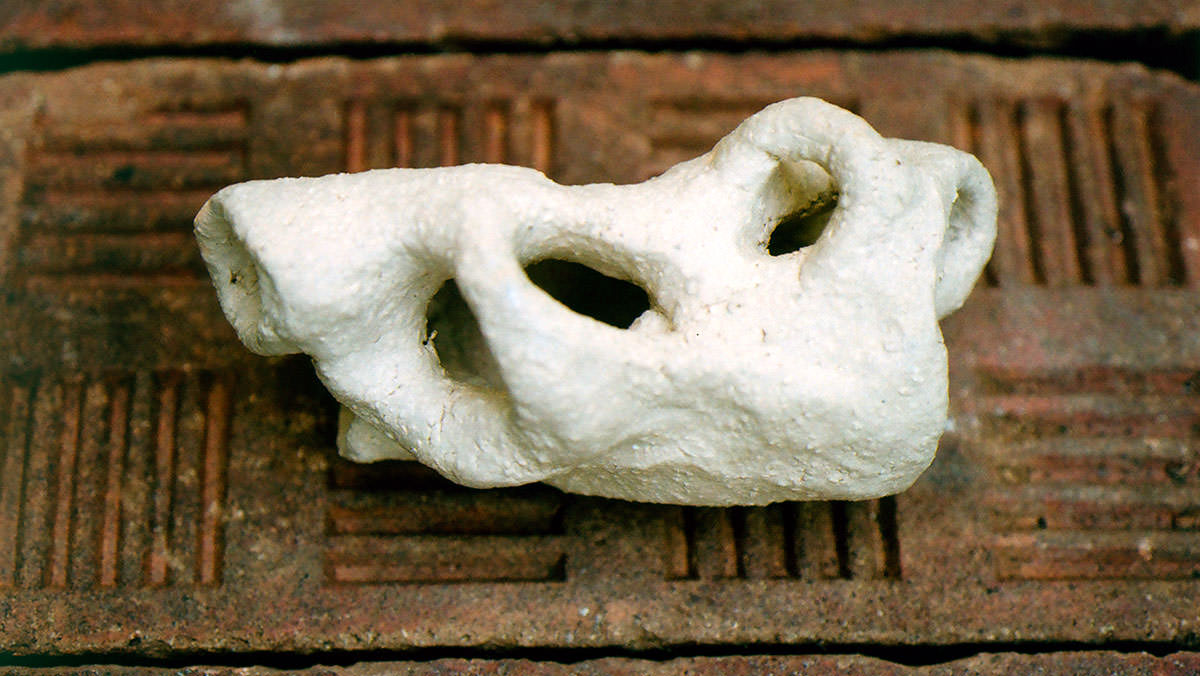
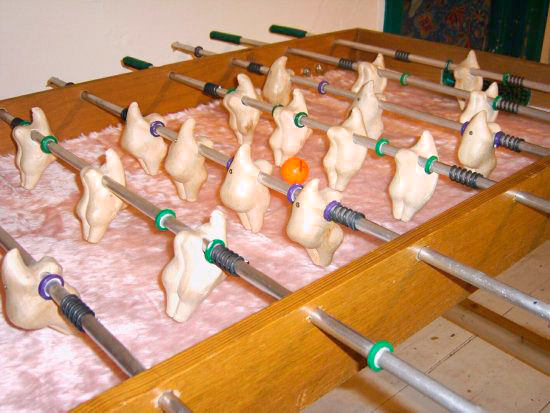
Seit einigen Jahren erarbeite ich Fruchtbarkeitsfiguren, sowohl von der Größe als auch formal auf das prähistorische Konzept eingehend. Um den Bezug zu unserer Kultur herzustellen, kam mir die Idee die Fruchtbarkeitsfiguren als Tischfußballspielerinnen fungieren zu lassen. In seiner Grösse ist der Tischfußball ein Fetisch, der zu einem rituellen Vorgang auffordert. Der Tischfußball als erkennbarer Bestandteil unserer Kultur ist ein guter Ansatz das Spiel der Frauen ins Geschehen zu bringen. 

Having worked for the last few years with clay figurines in the size of prehistoric fertility figurines I have been struck by the idea to adapt them as players for a table football set. In its connotation as a table with its different functions from preparing food, eating, sitting around, its use as a religious altar to be rituals performed on, I developed a new application of table football to play it as a woman’s game.

Table Football Game
Soho Cafe Vienna

Mai- Juni 2005
„Venuswuzzler“, exhibition in the Soho Cafe, Grundsteingasse 45-47, Vienna,
→ soho

„Venuswuzzler: ein Wuzzler mit „NANAS“ – geniale Idee – mein Kompliment an die Künstlerin!!!!!!
(Kommentar von jumpingjack flash in ‚die standard‘, 06/06/2005)

„Ein natürlicher Wuzzler beziehungsweise Venuswuzzler. Ein lustiger Tischfussball, nur eben anders, Frauen spielen mit, Frauen spielen aus. Kleine Holzfiguren, die gerne Fussball spielen!“
(Sonja Metz, 9 Jahre)

Table Football Performance
Royal Scottish Academy

17.9.2005 table football with porcelain figurines

The Performance

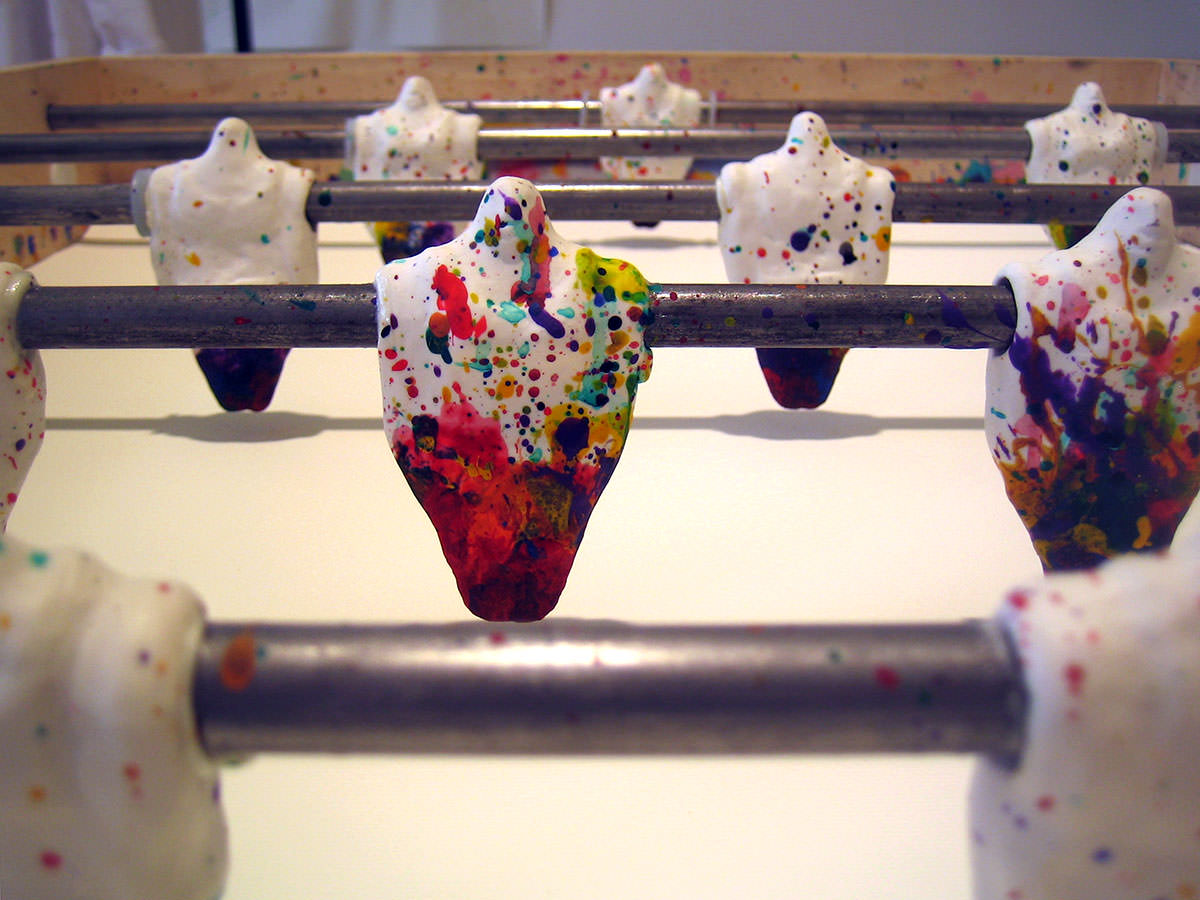
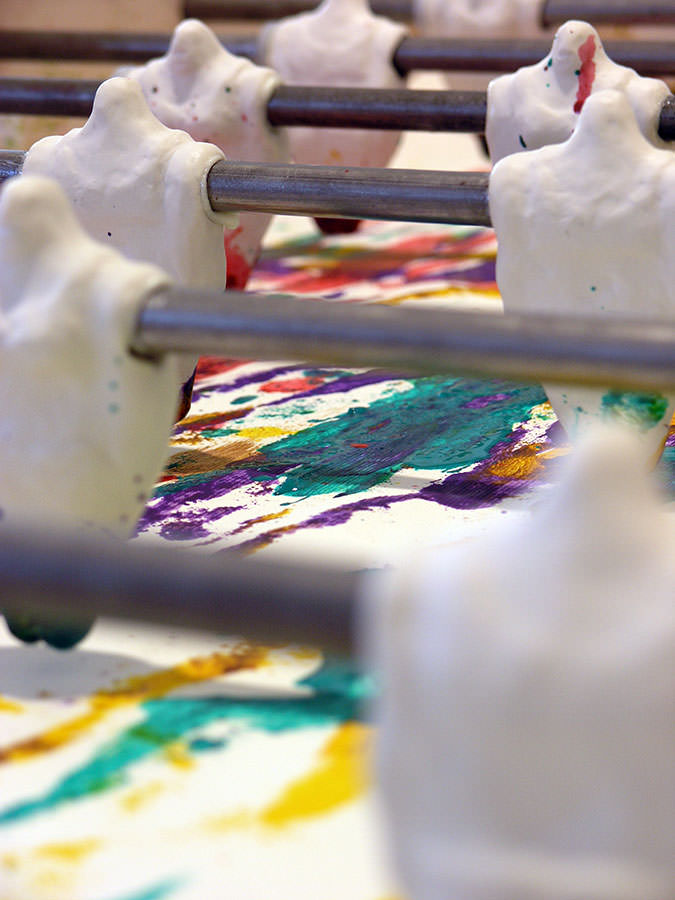
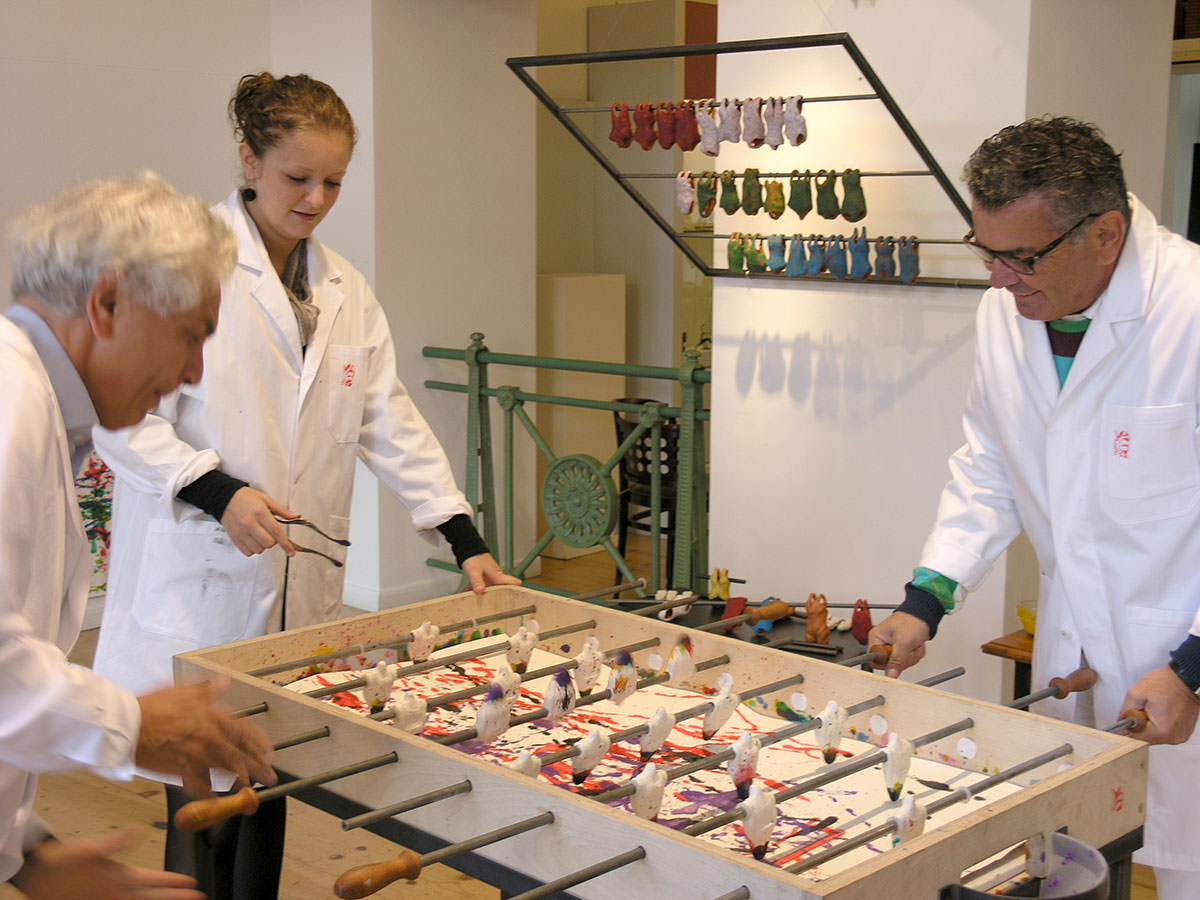
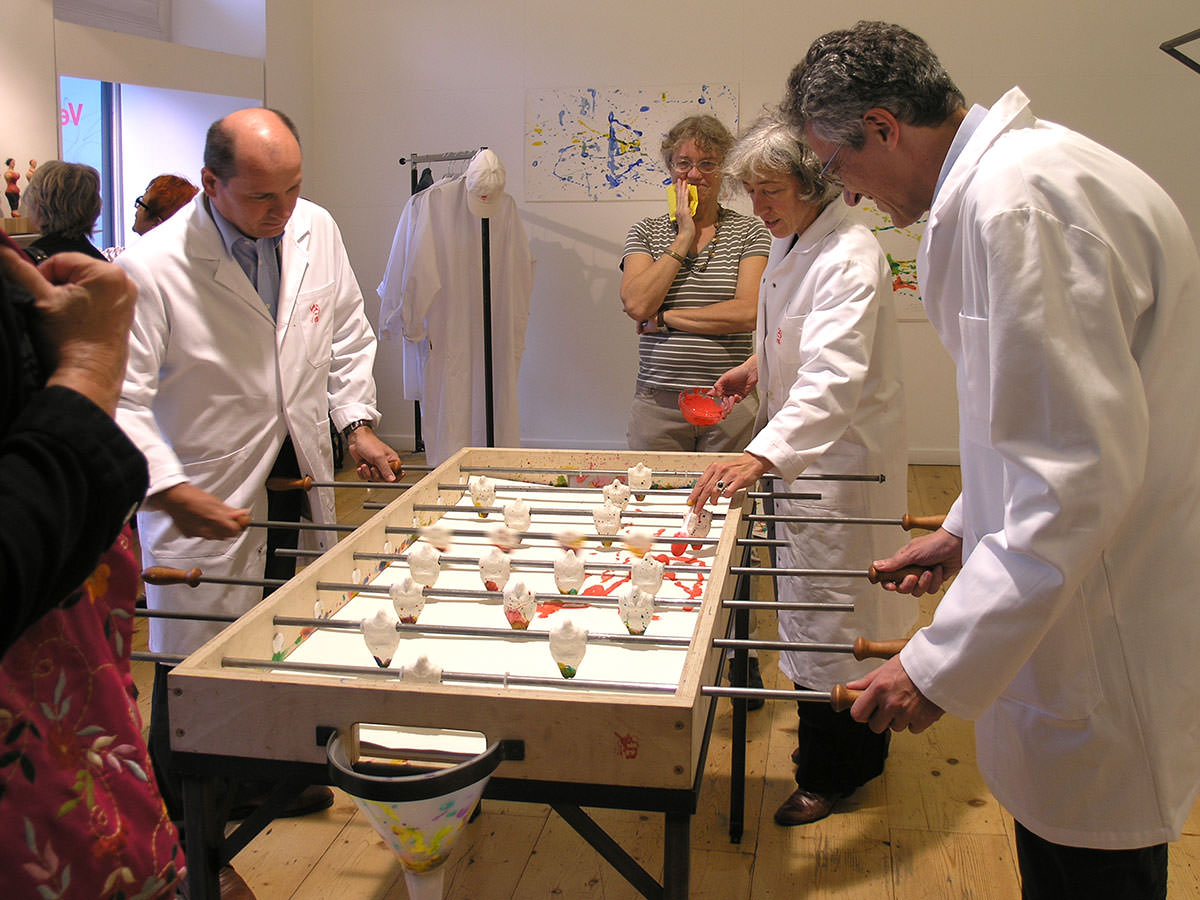
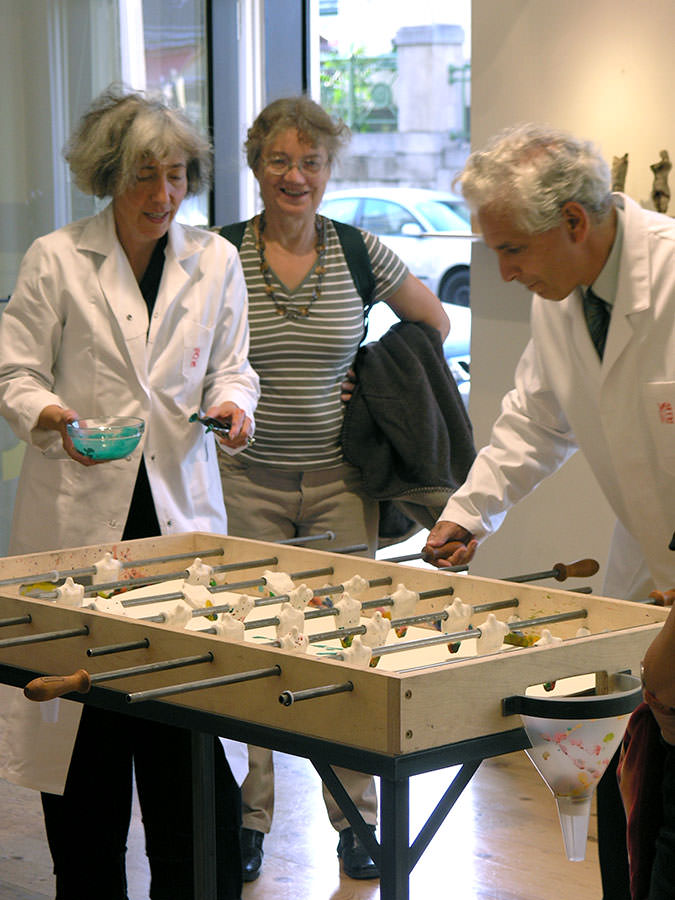
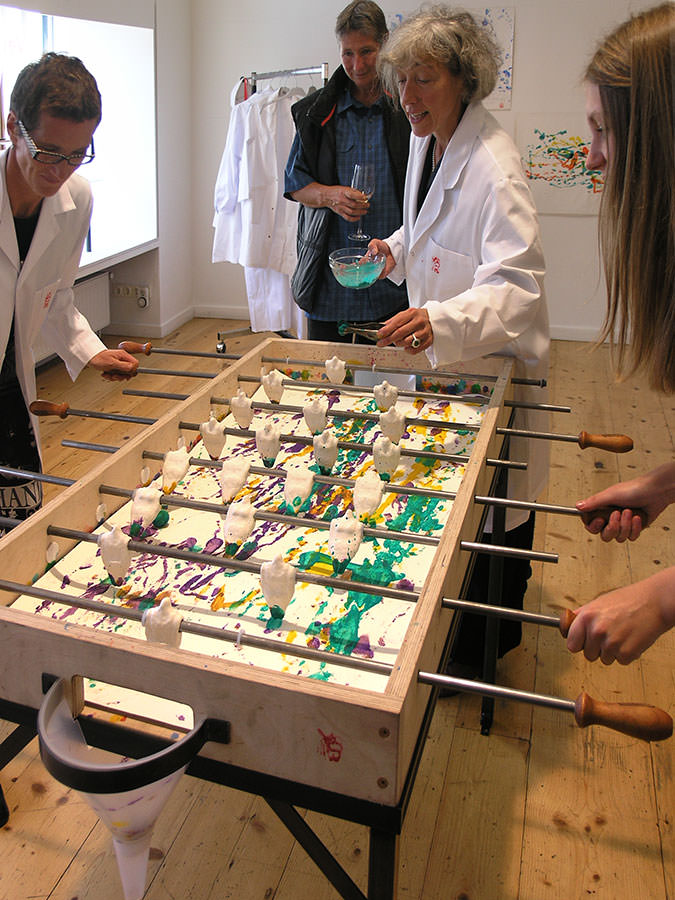
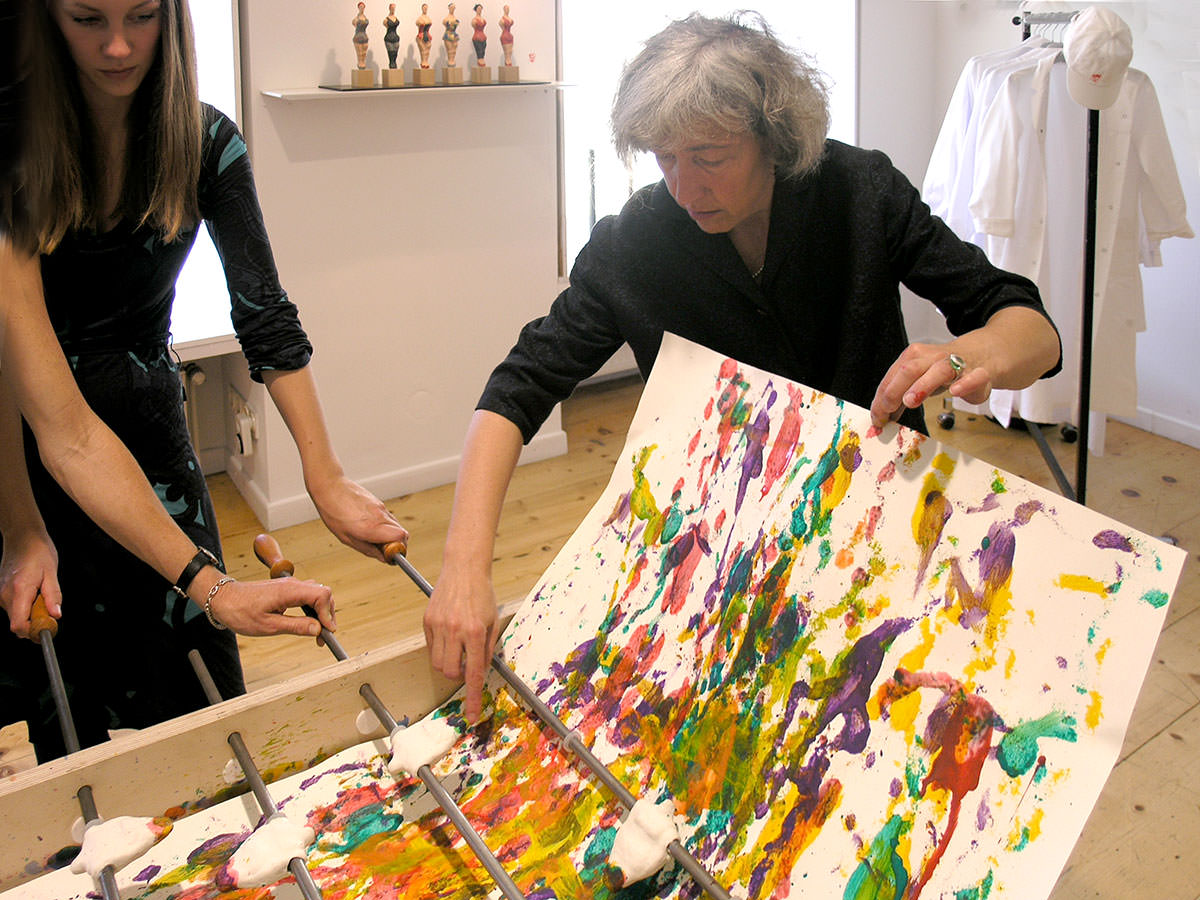
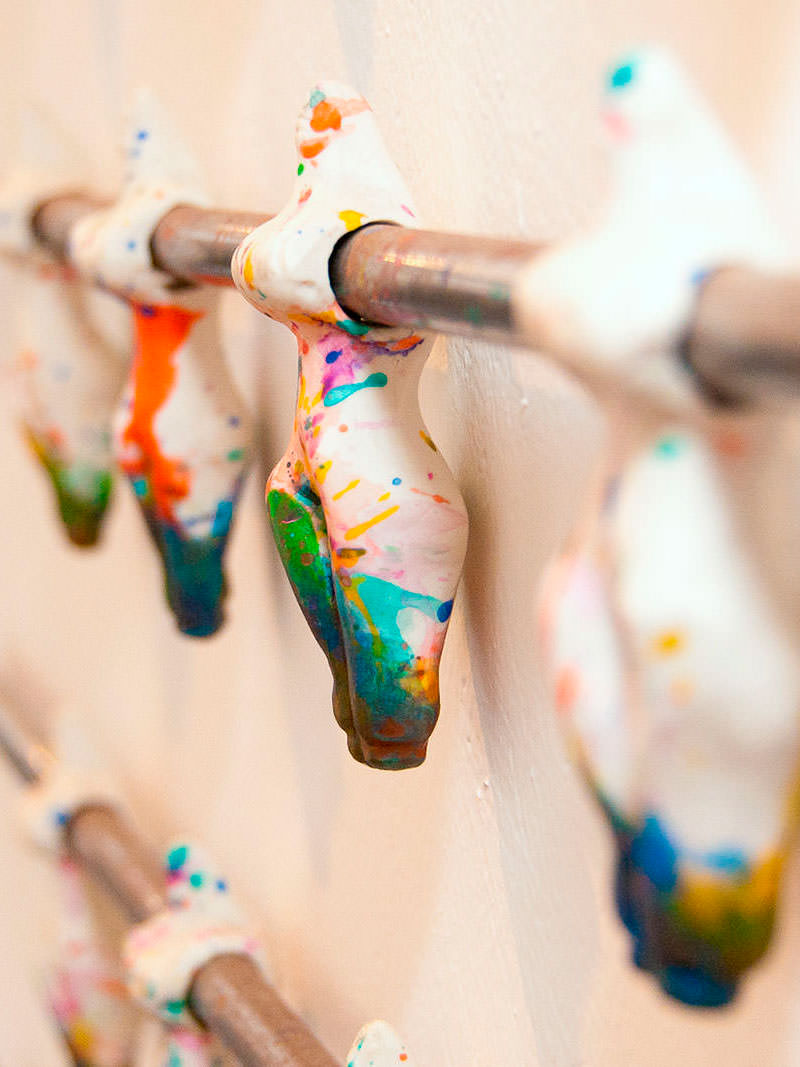
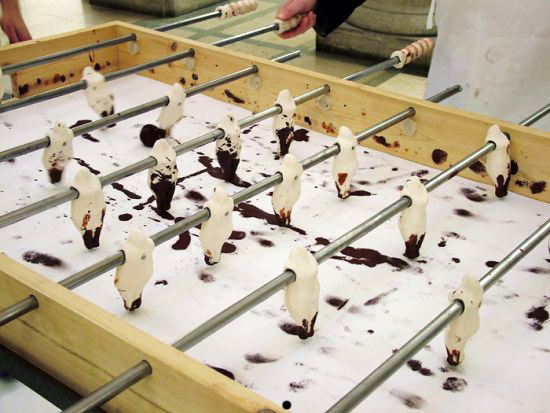
The ritual begins with the players being asked to put on an apron and to take their shoes off before stepping towards the table. The bottom of the table box is covered with a white linen sheet. The assistant (wearing an overall) makes the players acquainted with the rules of the game leading them to the side table, where 25 feltballs are placed beside two bowls one filled with red clay slip, the other with ochre clay slip. The play starts with the player who has won tossed coin landing – choosing the colour she/he is going to play with. The assistant then dips a feltball into the chosen clay liquid and puts it in front of one of the middle play figures of the first player. As in common table football the player is meant to score the goal, which on either side consists of a funnel keeping the ball when scored, yet allowing the colour to trickle on the sheet spread on the floor. By playing the figures get stained as well as the linen bottom records the tracks of the ball which functions as a drawing medium. Who scores gets her/his colour for the next play. After six scores the game is over and the linen is changed for the next players.

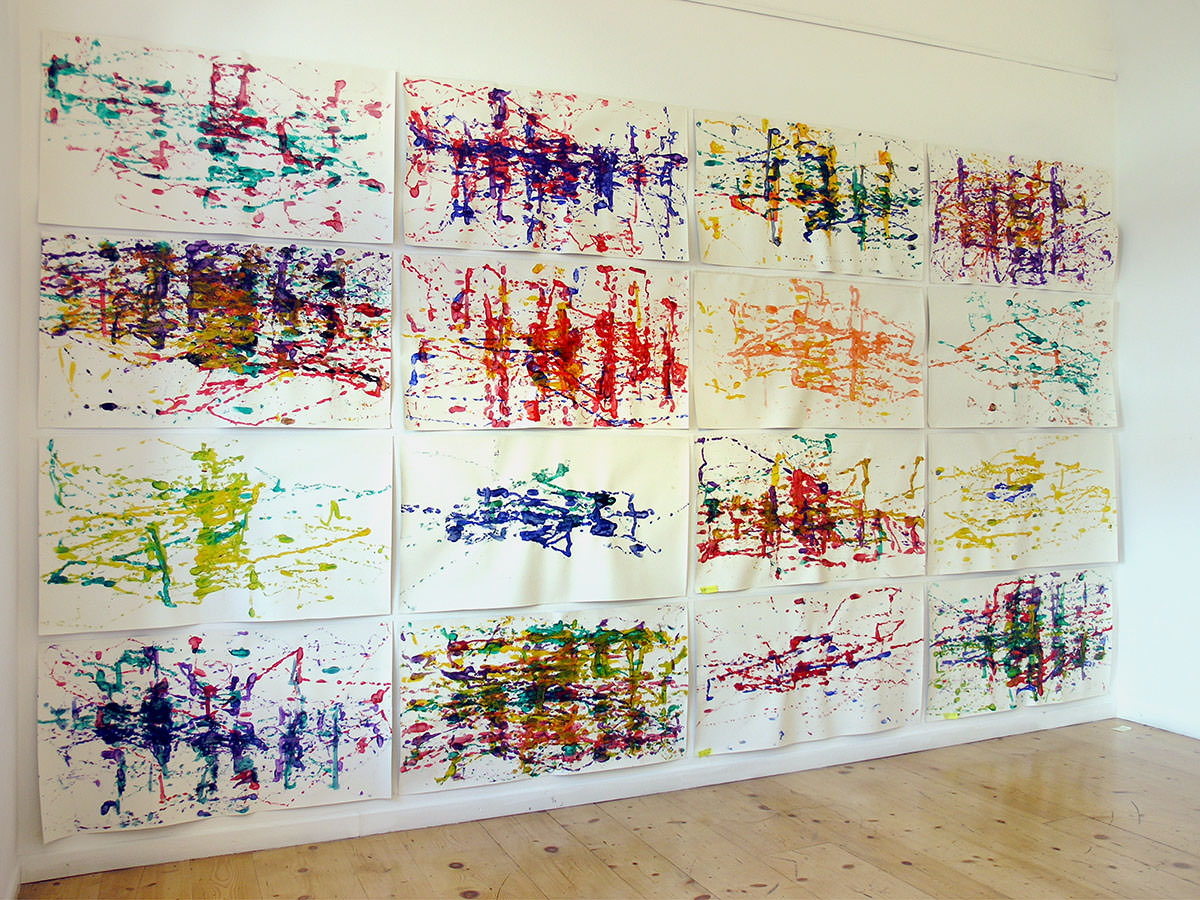
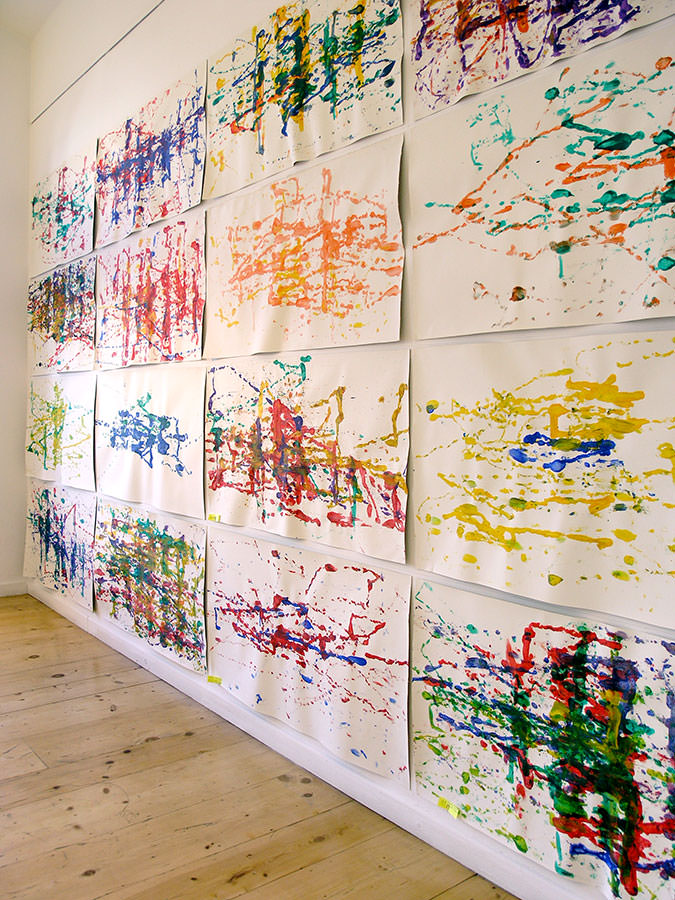
After the Performance: Seven games took place – and the seven drawings on the linen ground are the product of the game. The stained figures will be fired a second time to keep the impact of the game. A new table will be made with the fired stained figurines. The new table offers a game without the procedure of the ritus yet with the awareness of the woman’s game.

Venuswuzzler in der Kunsthandlung Patrick Kovacs Wien

16.9.2010
sintergebrannte Porzellanfiguren,
Tischlade 87 x 140 x 114 cm

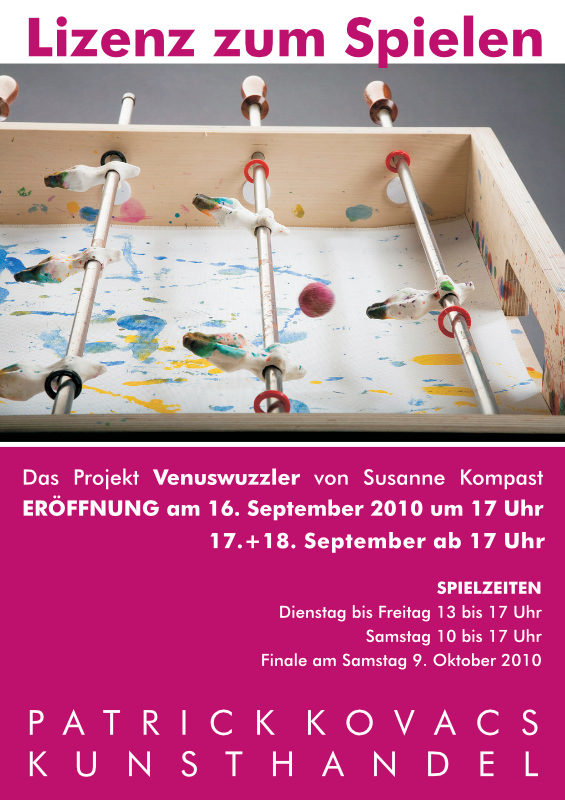
Lizenz zum Spielen

Der Venuswuzzler ist ein Tischfussball der besonderen Art. Die Spielerfiguren sind Venusfigurinnen. Wenn er bespielt wird, entsteht ein Bild, das die Spuren des gespielten Balles aufzeichnet. In dem Sinn wird das Spiel auch protokolliert. Durch das Spiel mit den Porzellanfigurinnen entsteht ein Protokollbild des Matches, das durch die Dynamik des Balles, der als Malmedium fungiert, eine gestische Qualität aufweist. Die aus dem Spiel  entstehenden Werke werden durch Signatur und Nummerierung autorisiert.
Die Namen der Spieler*innen und Datum werden auf der Vorderseite des Bildes geschrieben, auf der hinteren Seite des Bildes wird das Bild mit dem Stempel der Künstlerin signiert.

The Idea:

Having worked for the last few years with clay figurines in the size of prehistoric fertility figurines I was struck by the idea to adapt them as players for a table football set. In its connotation as a table with its different functions from preparing food, eating, sitting around, its use as a religious altar for rituals to be performed on, I developed a new application of table football to play it as a woman’s game.

The ancient roots of football are said to originate in Egypt around 1800 BC, and included aspects of fertility rites. In Britain, football started about 1000 years ago, And in the 18 th century developed to become the popular game of today. Socially football is a largely male-orientated game from the players to the spectators. As a public game, the masses are stimulated to identify themselves with specific teams, and therefore football has a highly emotive and tribal aspect.  Of course table football cannot be compared with the full game, although it appears to be a male fetish reflecting the game yet being diminished in size. The fact of having a table-sized game indicates the domestic character of a leisure game usually played at home or in the pub. Table football as a game is a catalyst for pals competing, expressing and leaving behind some of the restraints of daily life.

For many centuries women did not have the right to stand up for their rights. In patriarchal societies as in Europe their primary role was raising the children and keeping the household. There was no catalyst to escape the restraints of daily life by going out to public places. This did not suit the patriarchal structures. During the last hundred years big changes have taken place in the west to give women their rights and self esteem. Yet there are still aspects integrated as taboo themes within society’s rules, indicating the social status of women as different from men.

The Performance:

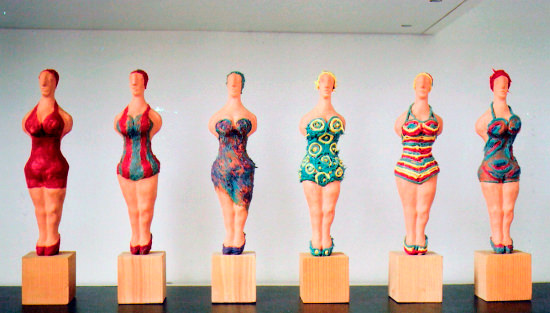
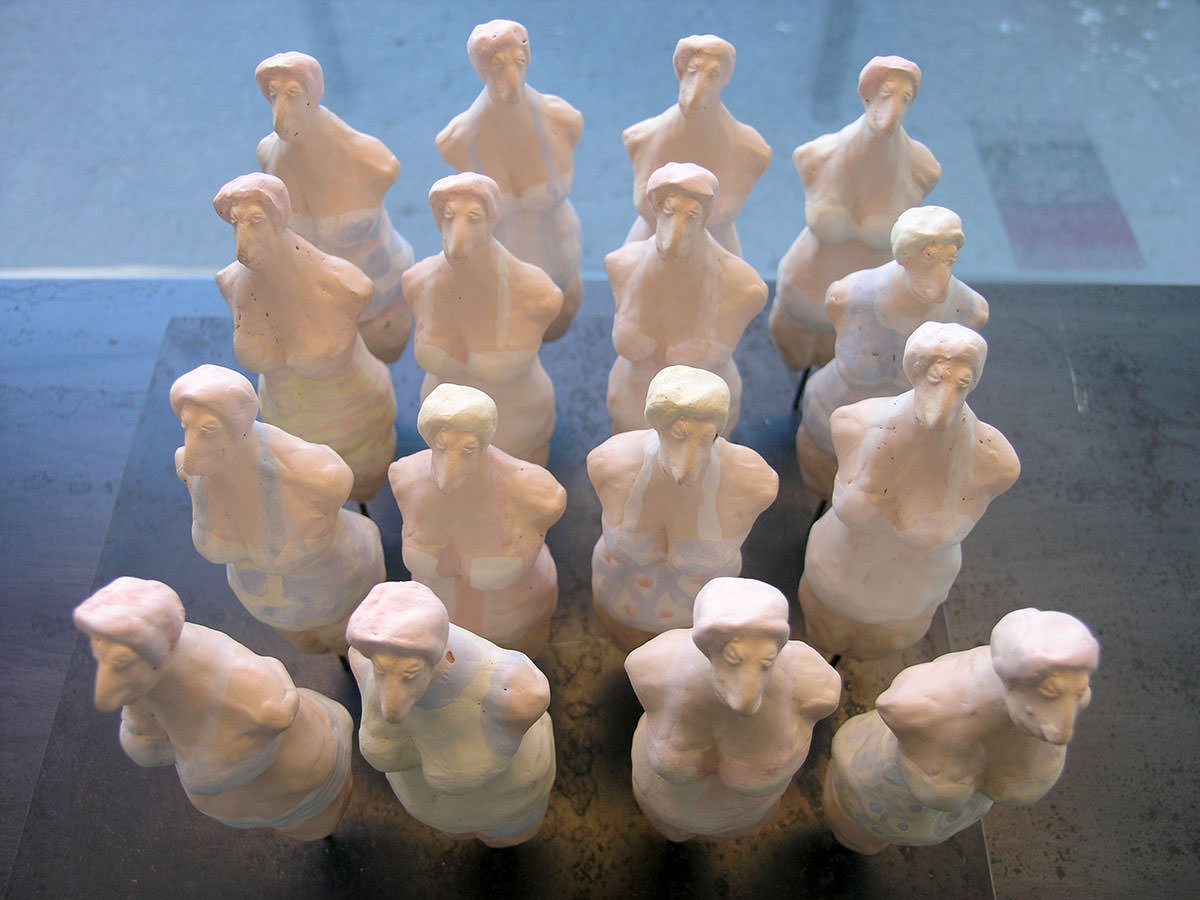
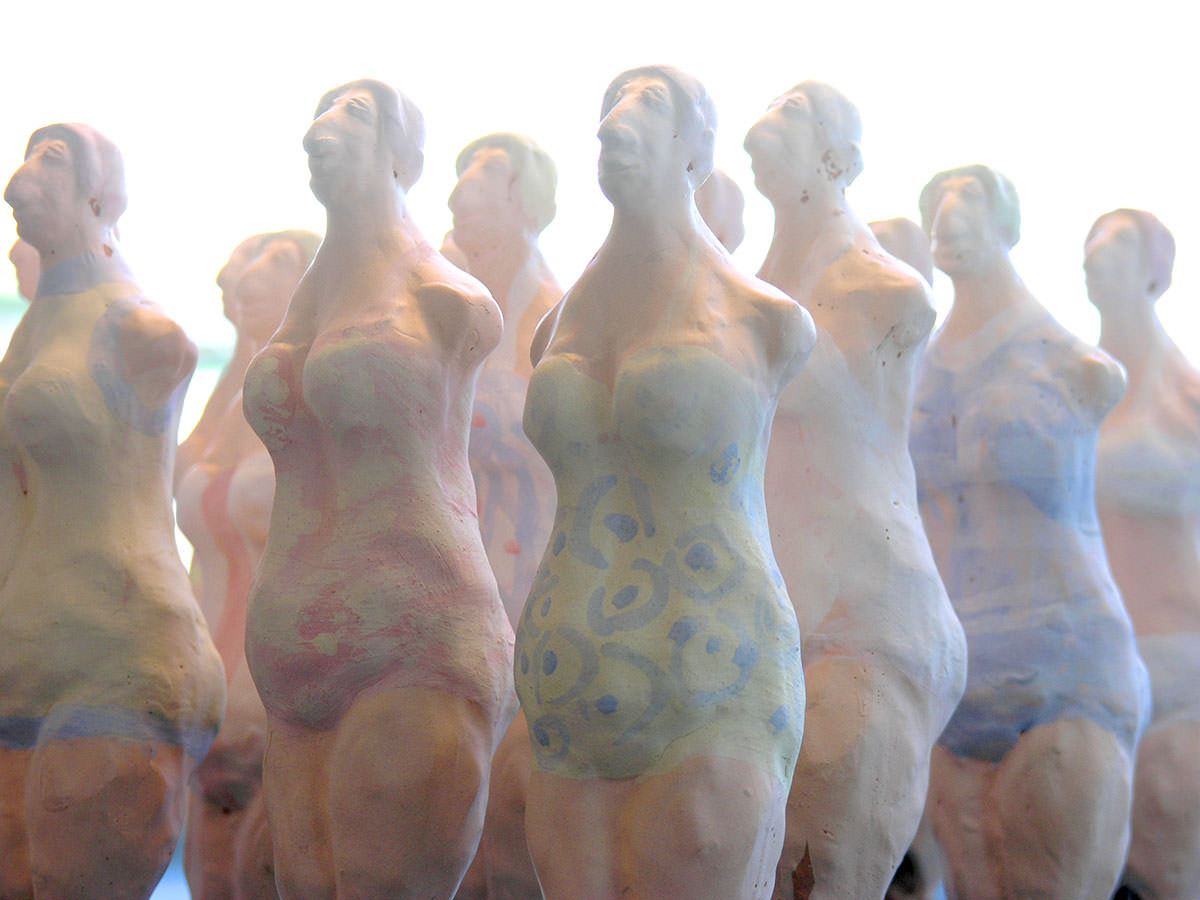
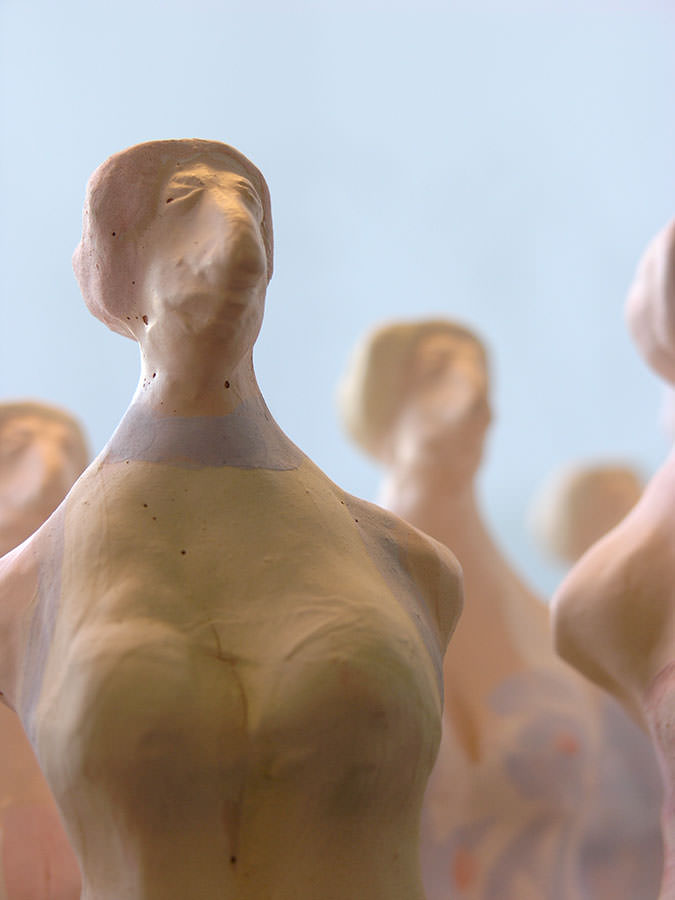
The figures are cast in porcelain fired in its natural colour. Evolved from prehistoric fertility figurines their appearance is stereotypical. Being dressed in bikini costumes they allude to participate in certain leisure rituals. The whole performance becomes a ritual in which certain aspects of female fertility rites are integrated within a predominantly male-orientated system.
… (APA) Für den Antiquitätenhändler Kovacs ist es „ein spannender Moment, mit zeitgenössischen, lebenden Künstlern zu arbeiten“. Er hatte Kompast persönlich eingeladen, in seinen Räumen auszustellen. „Die Leute sehen immer weisse Leinwände mit Farbklecksen und sagen: Das kann ich auch“, schilderte Kovacs. „Aber bei dieser Aktion sieht man ganz klar den geistigen Prozess, wie ein Werk geschaffen und schließlich zum Kunstwerk wird. Ebenfalls ein Novum für Kovacs: „Es ist eine sehr frauenorientierte Ausstellung.“ So stehen am Tisch selbst „Frauenschaften“ anstatt der traditionellen Manderln. Weibliche Fruchtbarkeitsfiguren, so die Intention Kompasts, sollen durch die „rituelle Performance in ein männlich dominiertes System integriert werden“.
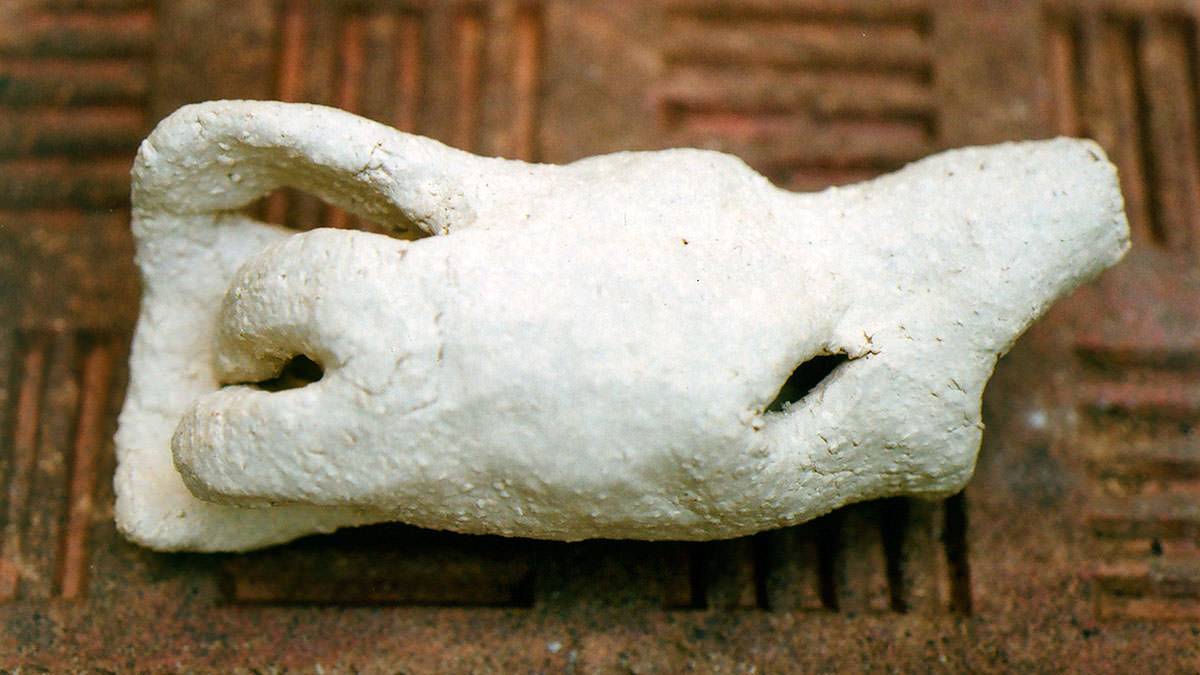
Bereits vor fünf Jahren wurde der „Venuswuzzler“ präsentiert. Damals hatte Kompast größtenteils mit Rot experimentiert, als „Farbe des Bluts“. Mittlerweile erstrahlen die fertigen Leinwände in Regenbogenfarben. Rund um den „Venuswuzzler“ sind andere Figuren Kompasts zu sehen, sie alle gehen auf die Inspiration durch Fruchtbarkeitsrasseln zurück: hohle Figuren aus Ton, mit einer Kugel im Inneren. „Die ersten drei Jahre habe ich nur Rasseln geformt, daraus haben sich Serien entwickelt“, so Kompast zur APA. 28 Tonfiguren in Form von Badeanzügen, mit Akrylfarben bemalt, stellen beispielsweise den Monatszyklus der 52-Jährigen dar. „Rot steht offensichtlich für die Regelzeit, die gelbe Figur signalisiert meinen Eisprung“ schilderte Kompast. Die „Matrix der Frau“-Serie ist ebenso zu sehen wie die „Old Aged Barbiepuppen“ („Ich nenne sie auch Gänsehäufl-Serie“), und „Middle Aged Barbiepuppen“. „Ich reize das Thema wirklich aus“ meint Kompast.

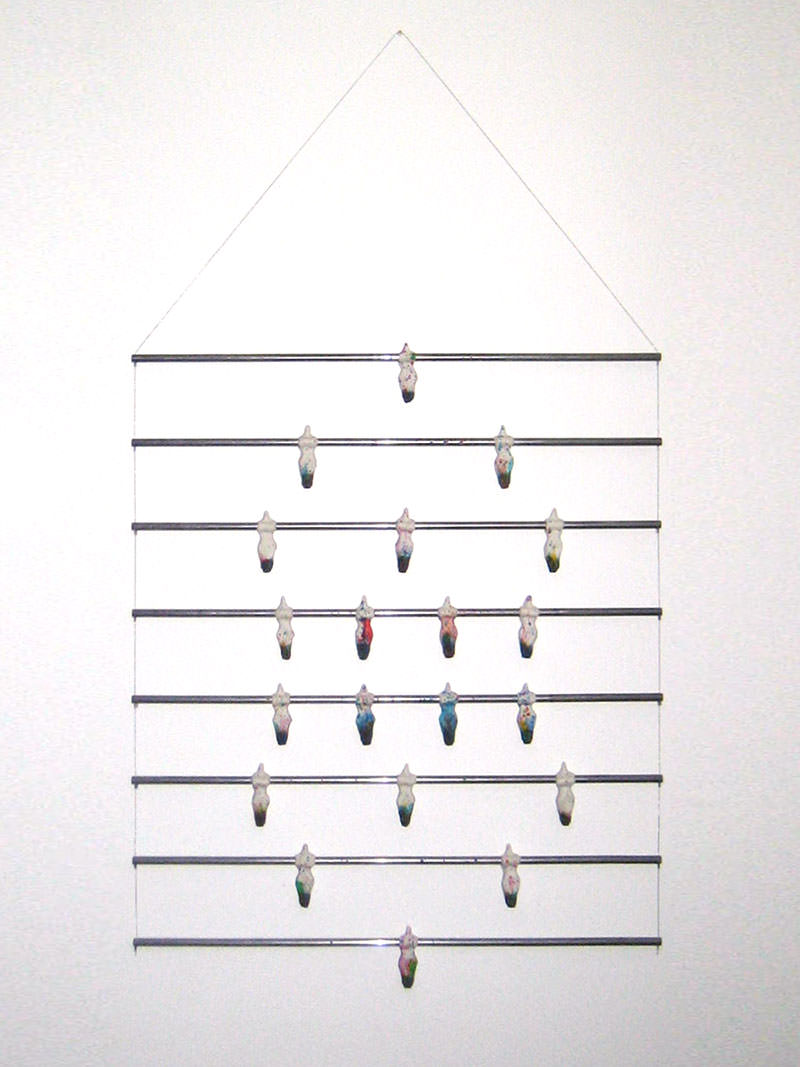
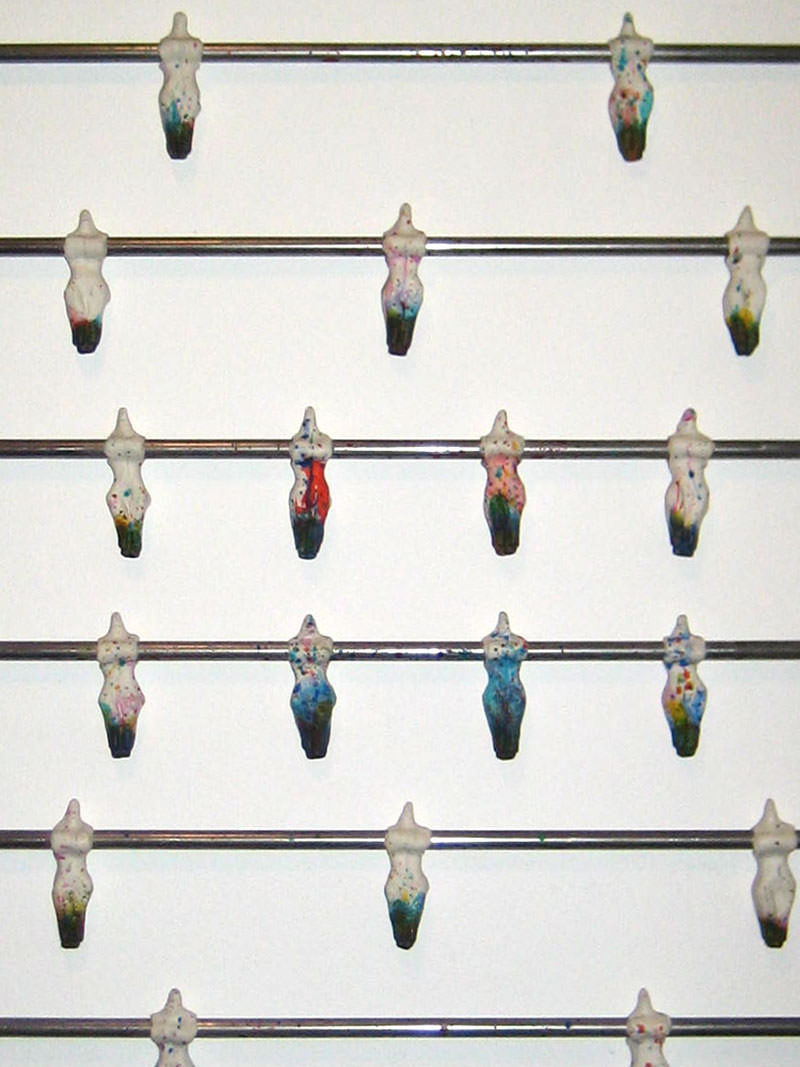
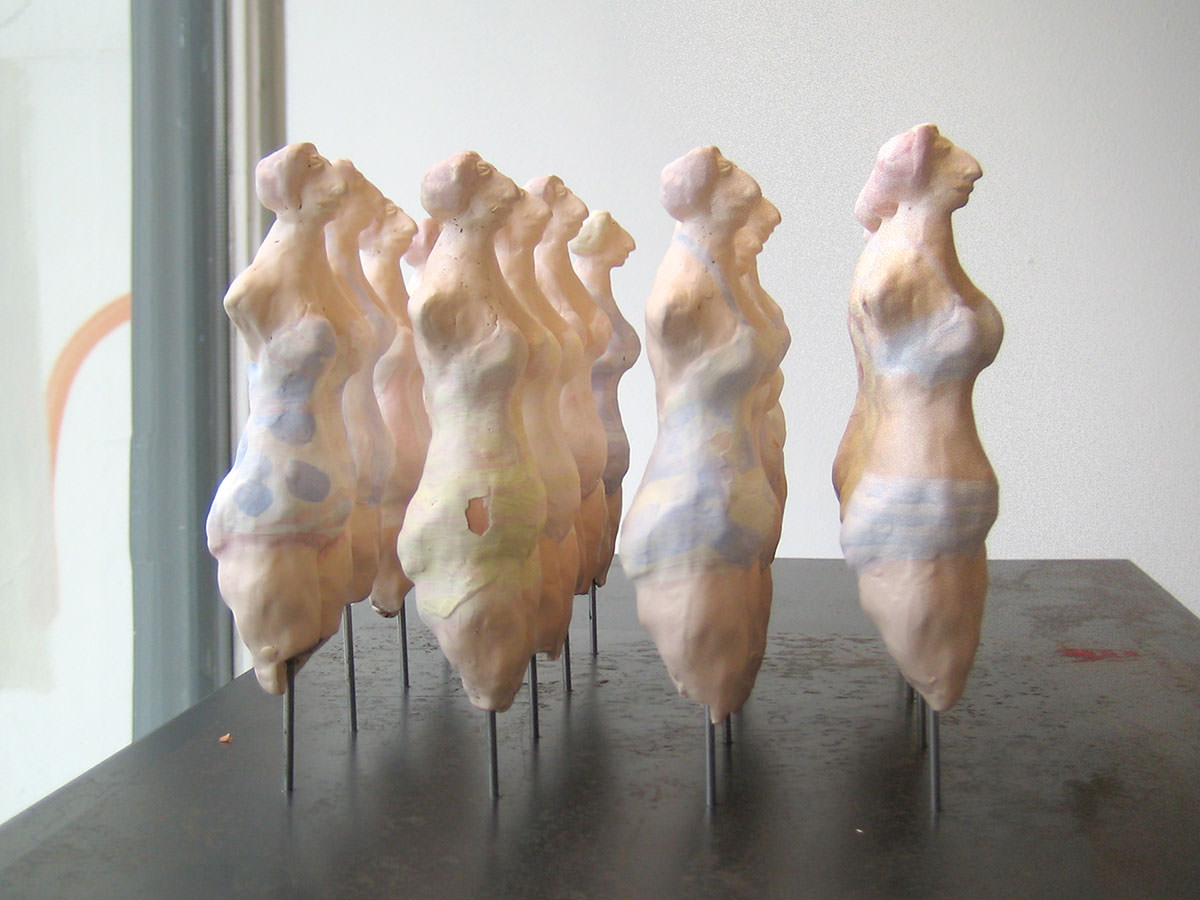
Frauenschaft

2009
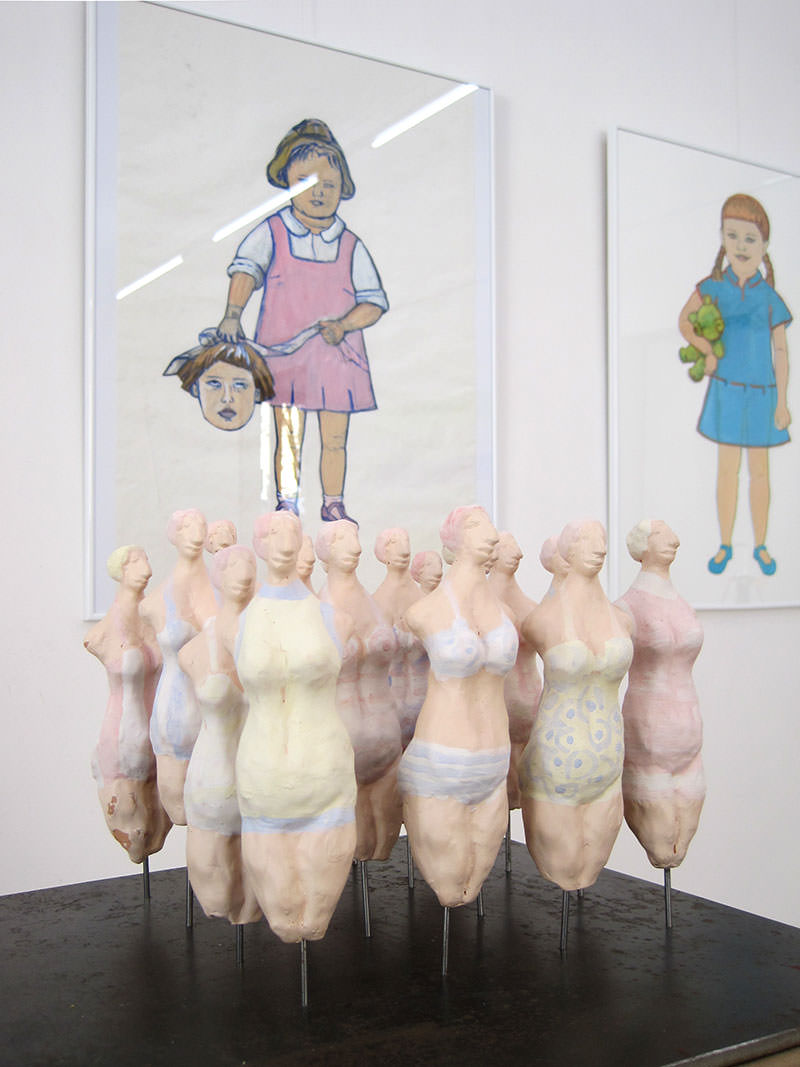
Installation, 20 befleckte Porzellanfiguren, Eisenstangen, Drahtseil, 90 x 80 x 3 cm

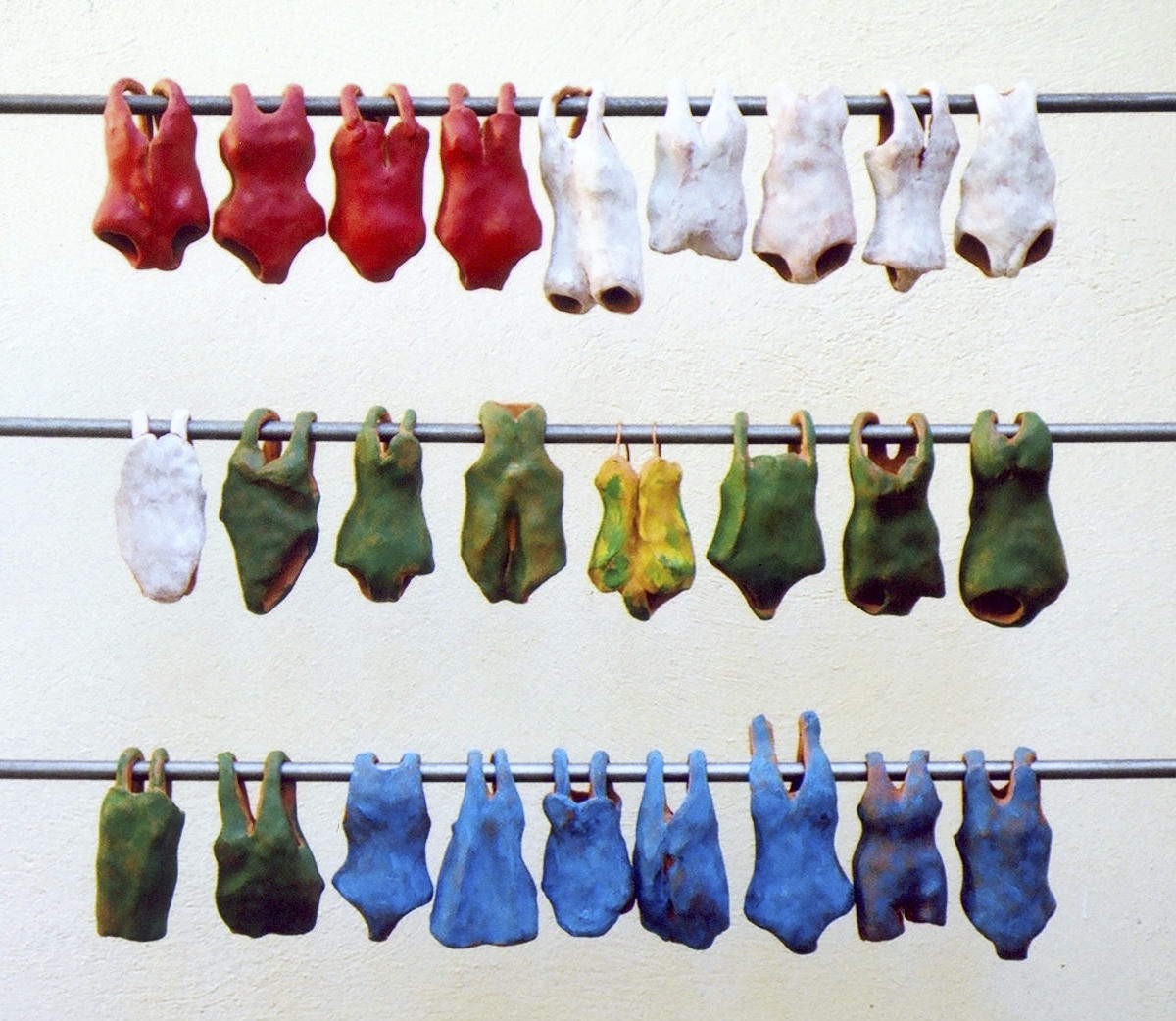
Matrix der Frau

2009
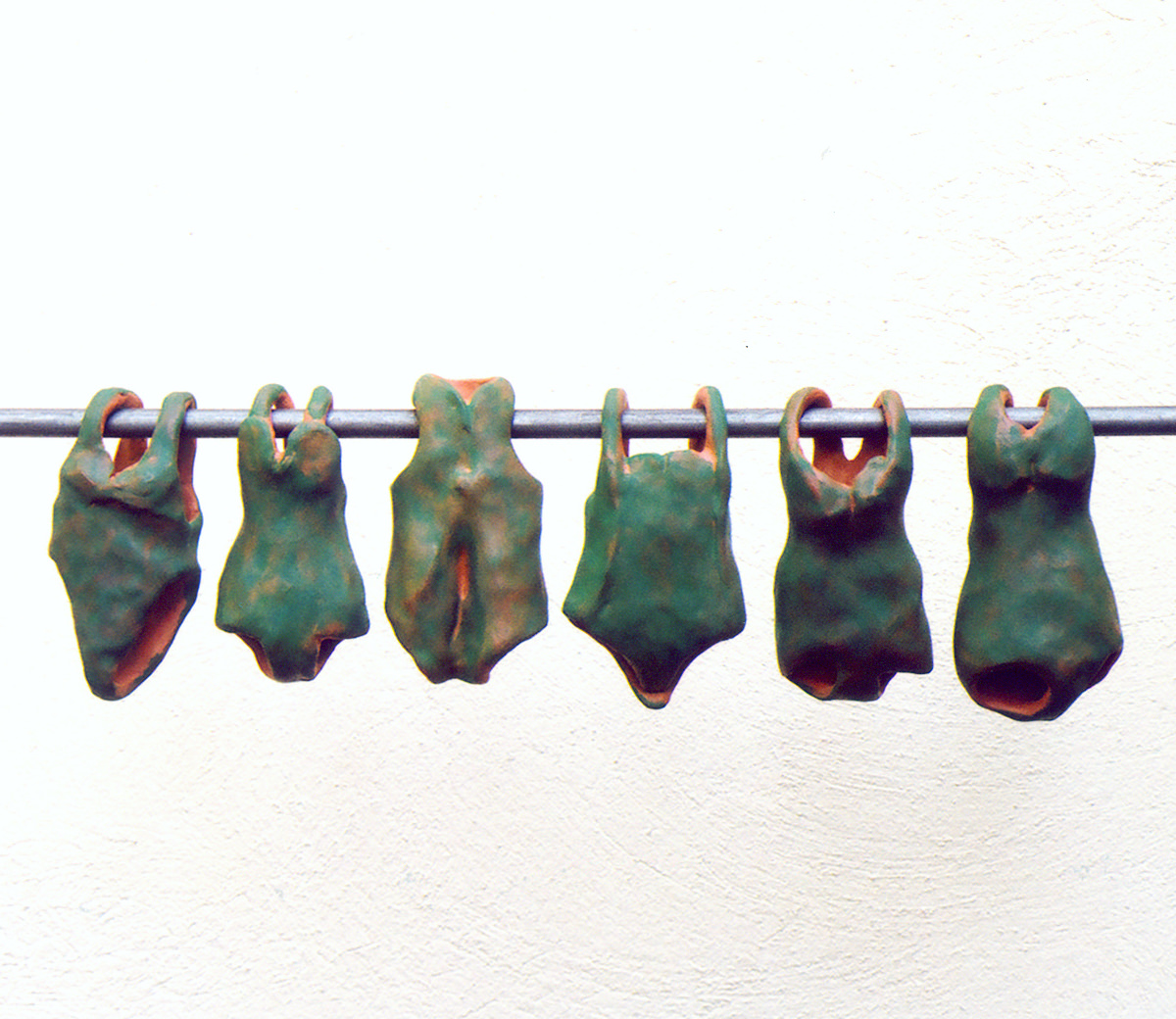
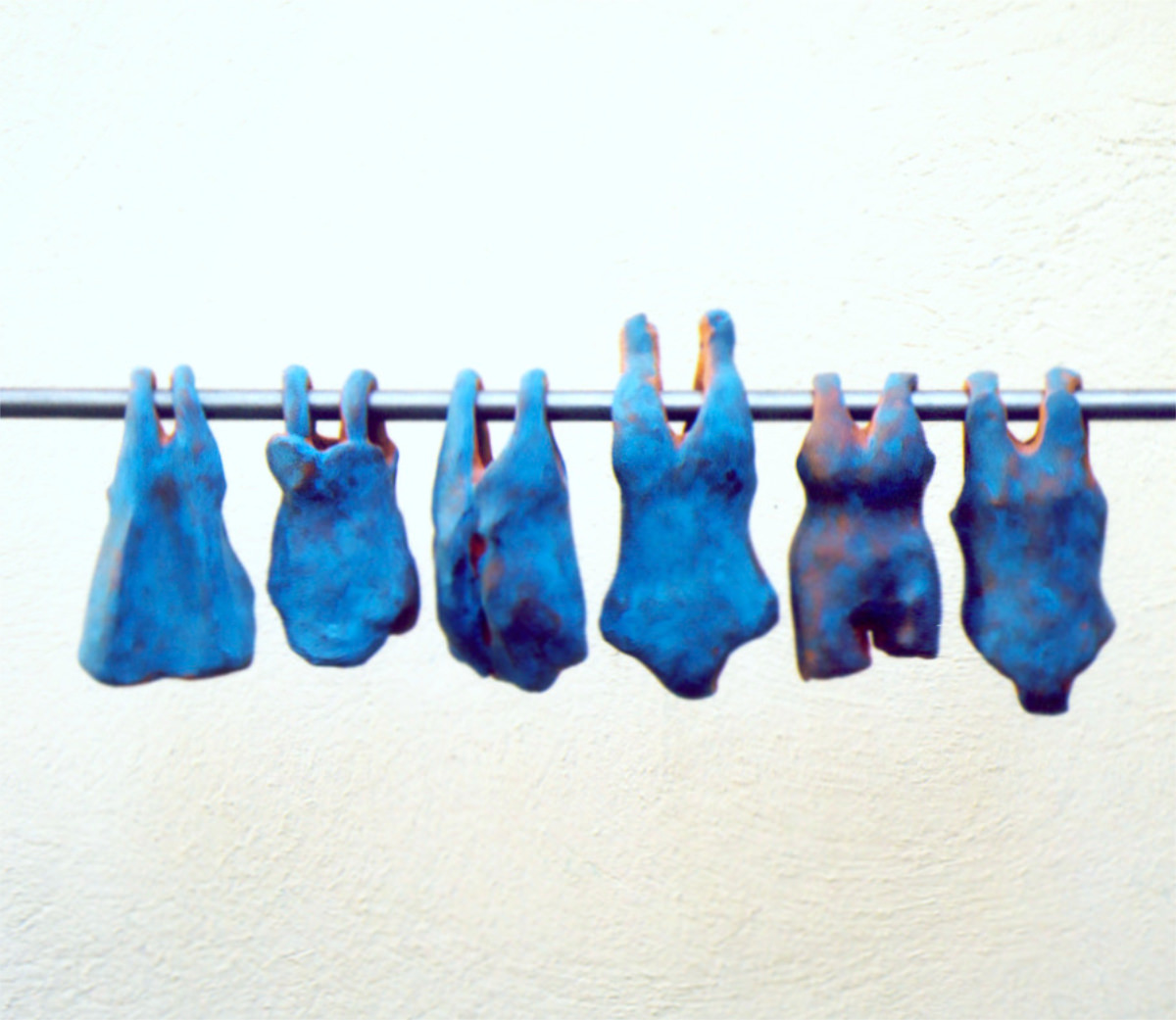
28 Badeanzüge aus Ton
70 x 70 x 8 cm

Ausstellung „Frauenzeit“
Galerie Denkraum Wien
März 2009

CYCLES

Der Terminus „Fruchtbarkeitsfigur“ inspirierte Susanne Kompast die künstlerische Auseinandersetzung direkt mit der persönlichen Erfahrung als Frau durch den monatlichen Zyklus in Verbindung zu bringen. Sie begann die tägliche Befindlichkeit während des Zyklus mit Tonfiguren zu protokollieren. Der erste auf diese Weise entstandene Zyklus bildete den Ausgangspunkt zur gemeinsamen Ausstellung Cabinets of Time (download .pdf) mit Alexander Curtis, die im Rahmen von Soho in Ottakring 2003 in der Masc Foundation gezeigt wurde.

Eine andere Herangehensweise der Künstlerin ist das Formen eines Prototyps in Ton, den sie mit der Technik des Giessens vervielfältigt.
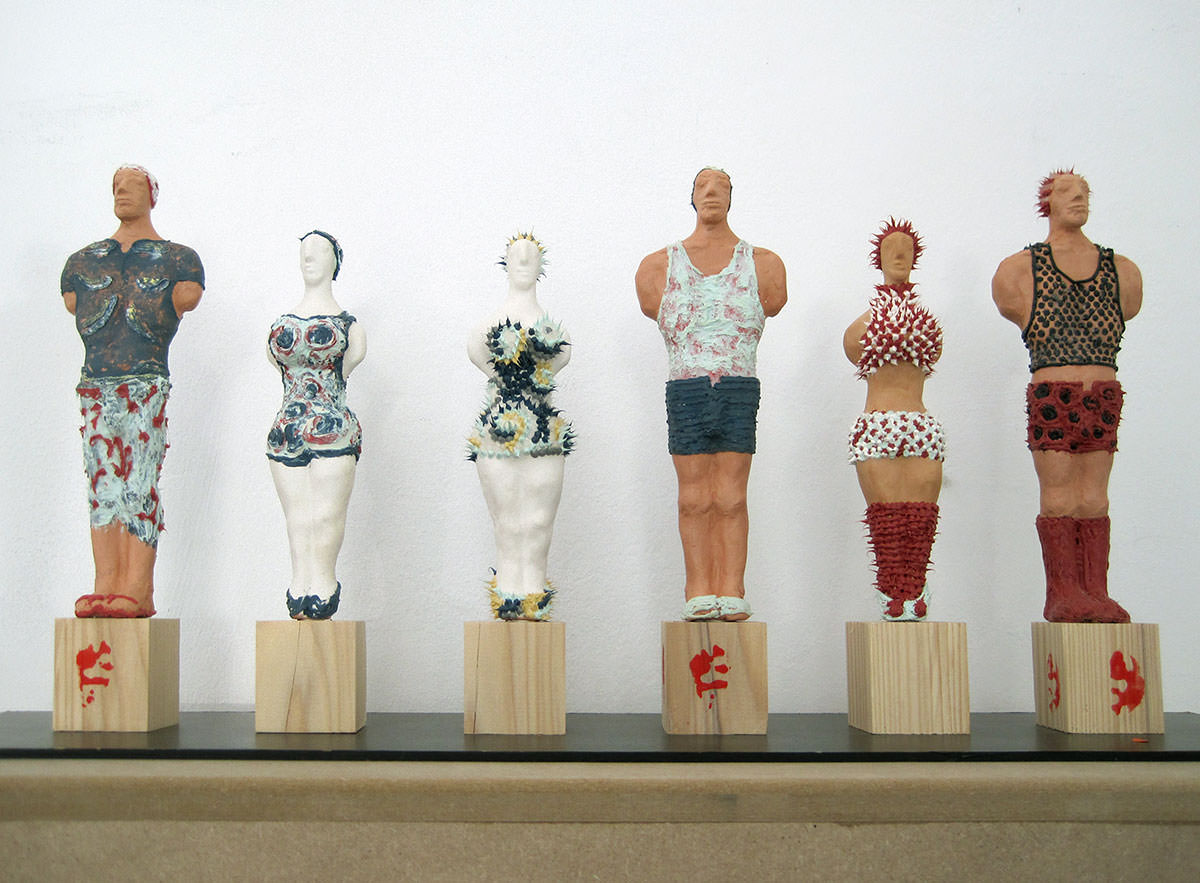
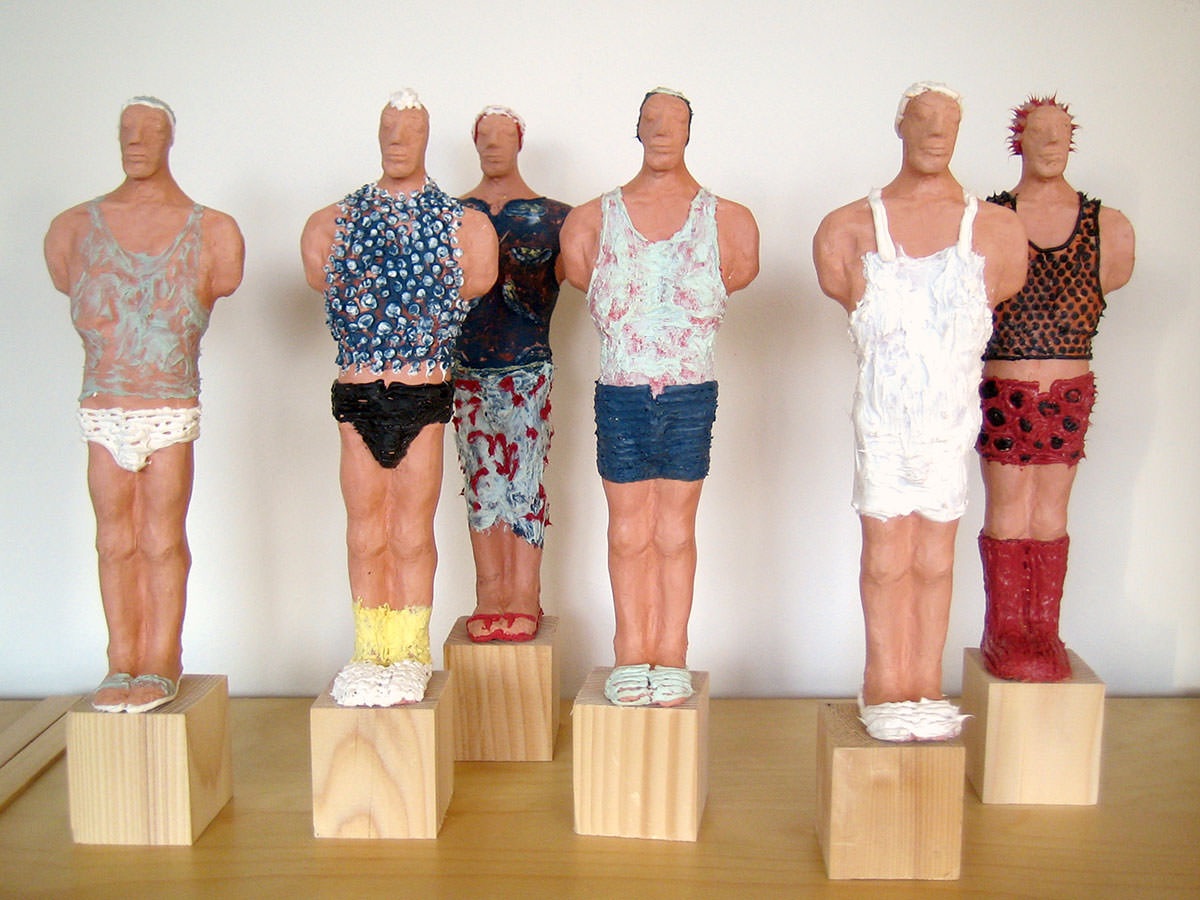
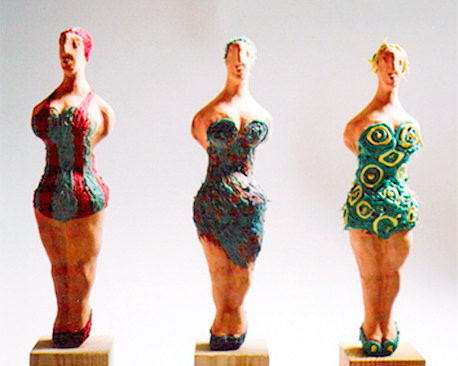
Die daraus entstehenden Serien sind in Ton oder Porzellan gegossen wie die Middle-Aged-Barbies und auch die Frauenschaften für den Venuswuzzler, u.a.

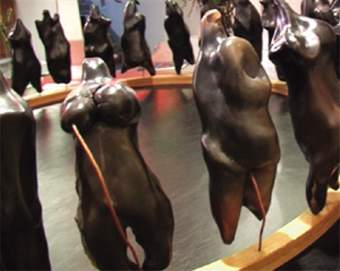
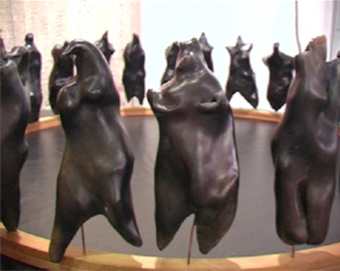
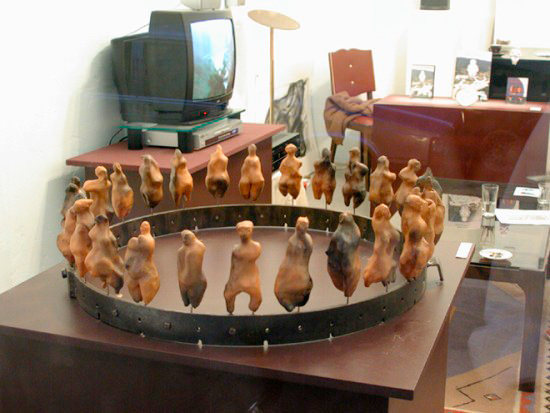
Inspired by the term fertility figurine Susanne Kompast based her work on the monthly cycle by making use of the inner calendar. The result is a cycle of 28 figurines – a protocoll of the daily condition from one period to the other. The first monthly cycle was shown at the exhibition Cabinets of Time she did with Alexander Curtis taking part at the Soho in Ottakring festival 2003. The idea is to transpose the concept of archaic fertility figurines into today’s time. The installations are an expression of the deeply rooted ambivalence of the woman’s place in society.

The other way is to create a series by forming a prototype which is casted in clay or porcelain by 28 times such as pine, middle aged barbie dolls, football-players.

gegossen

Barbie

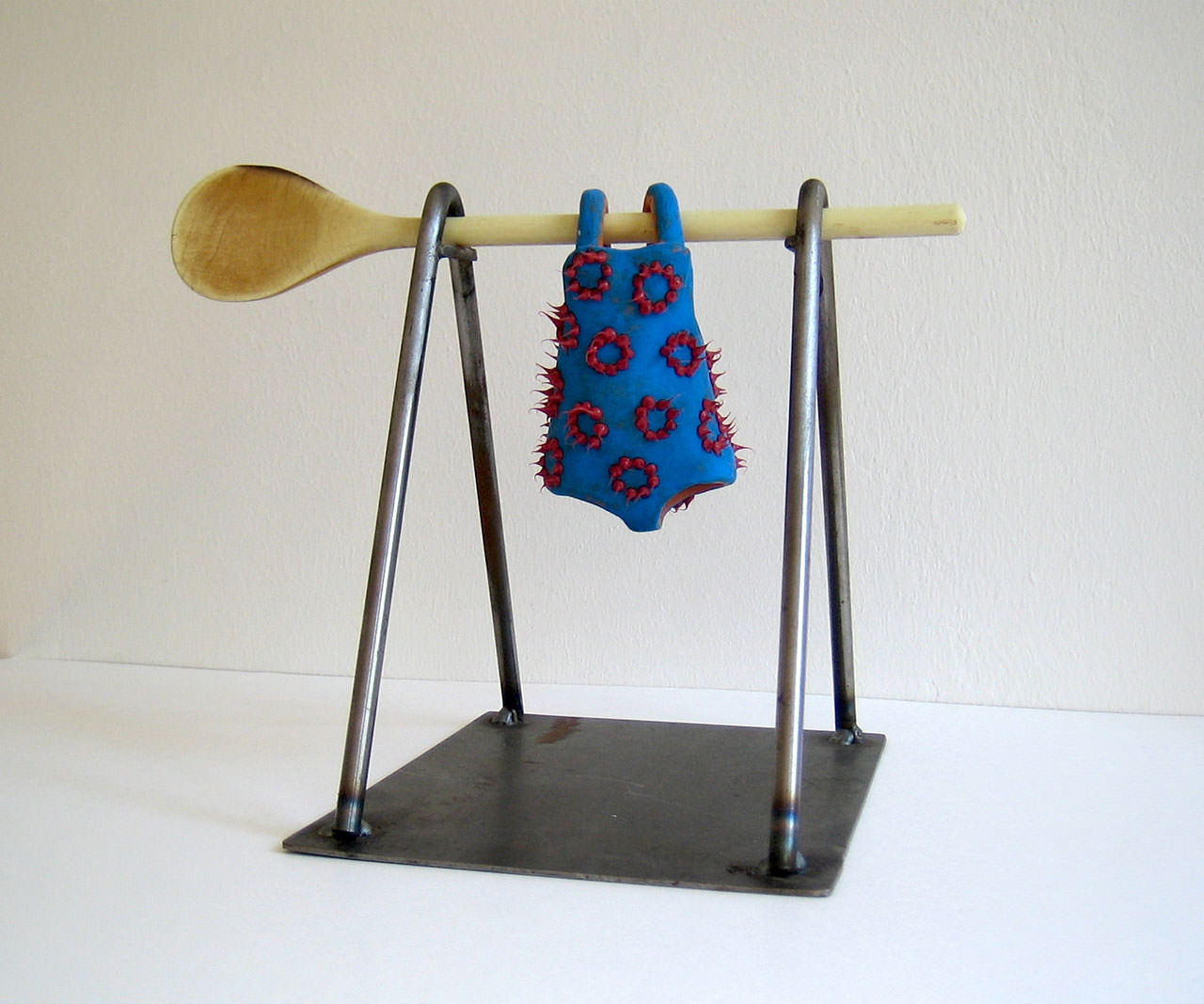
2007/08, Tonfiguren mit Badekostüm
20 x 5 x 5 cm

Gänsehäufel

2004
Tonfiguren, Terra sigillata Glasur, Eisen
18 x 35 x 35 cm

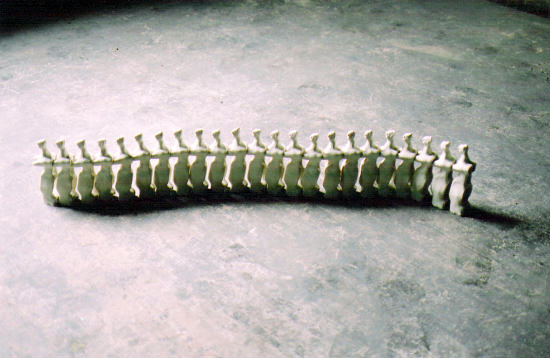
Spine

2008
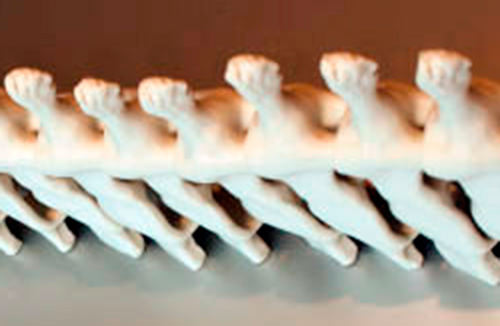
28 gegossene Porzellanfigurinen, Sinterbrand, 11 x 6 x 70 cm

geformt

My Personal Cycle

My personal cycle I
2003, clay figurines, iron ring,
25 x 80 x 80 cm

My personal cycle II
clay figurines, wooden ring
20 x 80 x 80 cm

Exhibition „Cabinets of Time“
masc foundation, Vienna 2003.

Read more about the installation by Susanne Kompast and Alexander Curtis:
→ PDF: CABINETS OF TIME

Zyklen

… Als ich nach dem Studium der Bildhauerei am Edinburgh College of Art (1980 – 85) nach Wien zurückkehrte, wurde die archaische Frauengestalt eine der Inspirationsquellen. Vom Terminus „Fruchtbarkeitsfigur“ inspiriert begann ich die künstlerische Auseinandersetzung direkt mit der persönlichen Erfahrung als Frau während des monatlichen Zyklus in Verbindung zu setzen. Ich begann meine tägliche Befindlichkeit während des Zyklus‘ mit Tonfiguren zu protokollieren.

Über den Zeitraum eines Monats wird pro Tag eine Figurine geformt, wodurch ein in sich geschlossener Zyklus entsteht. Das Verhältnis vom Thema zum Material ist reziprok, da der Ton in seiner Eigenschaft der Verformbarkeit immer wieder zu neuen Gestaltungsformen führt. Jeder Zyklus hat einen anderen Ansatzpunkt, wodurch die Formenwelt der archaischen Figurine abstrahiert wird.

Extended capacity

Mai 2006
installation und klangperformance
d51_kantine

TOPOSI

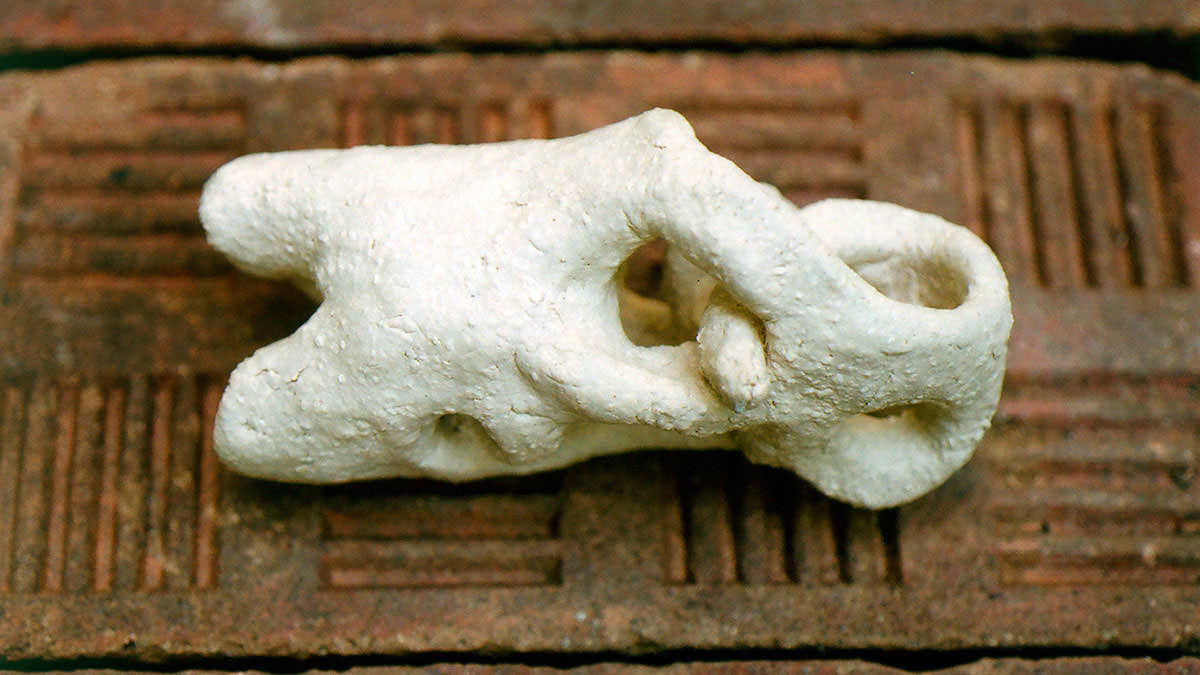
Mit dem Zyklus „Topos“ wird die Frauenfigur durch das formale Element der Perforation abstrahiert. Jeden Tag des Monats entsteht eine neue Skulptur mit dem Unterschied, dass pro Tag eine weitere Perforation die Form bestimmt. Der Kalender ist in den Figuren durch die Anzahl der Perforationen ablesbar.